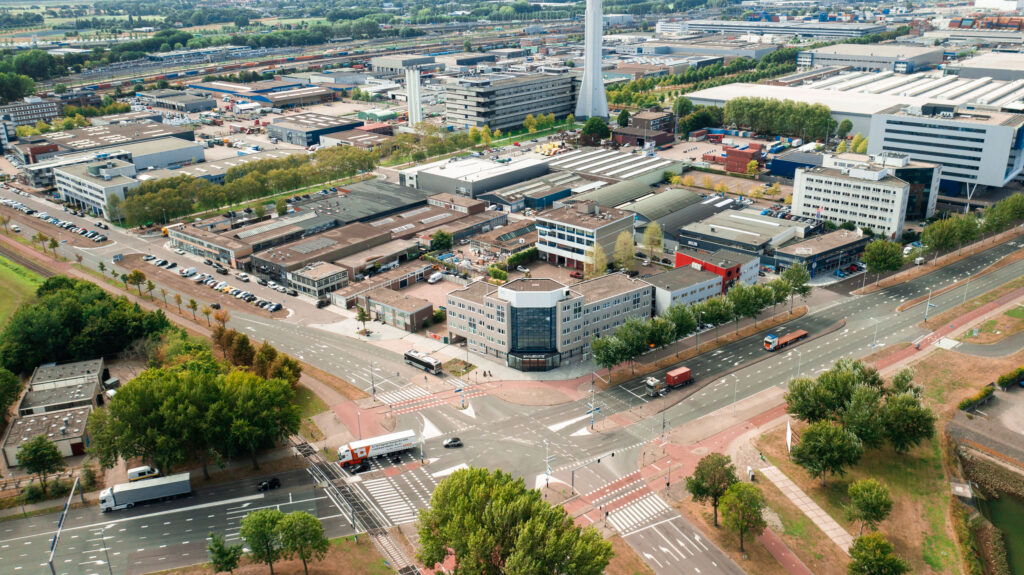
Creating value in commercial real estate: How I build returns from tired office buildings
Creating value in commercial real estate means buying a problem I already know how to solve. In nine years of office repositioning, I have learned exactly what works and what does not. Here is the playbook I run on every deal.
I stepped into commercial real estate by accident on June 1, 2015. What started as a general interest in buildings became, over the course of a year, an obsession with creating value through repositioning. I no longer cared about chasing quick gains. I wanted to buy tired, under-occupied office buildings and turn them into institutional-grade assets. That is the work I have done for the past nine years, and it is still the only work I want to do.
Creating value in commercial real estate is not complicated. It is the discipline of buying a problem at the right price, executing a reposition without overrunning the budget, and selling the stabilized result to an investor who wants boring, institutional income. This post is the exact framework I run on every office dealâthe sourcing logic, the underwriting discipline, the execution timeline, and the reasons that deals fail when they do.
The value-add strategy: buy underperformance, sell institutional quality
A value-add office deal lives between core and opportunistic on the risk spectrum. Core is stabilized, fully let, institutional-quality income at a 5.5% to 6.25% cap rate. Opportunistic is ground-up development or distressed turnarounds with material execution risk. Value-add sits in the middle: the building already exists, it already generates some cash flow, but it is operating well below what it should be. My entire job is to close the gap between in-place NOI and the stabilized NOI the building can deliver after repositioning.
I buy at a yield that reflects the mess I am inheritingâtypically 7.5% to 9.5% going-in yield on Dutch regional offices. I then underwrite to a stabilized yield-on-cost that is 150 to 300 basis points above the exit cap rate a core buyer will accept. That spread is the entire trade. Everything else is execution discipline. This is what I cover in detail in my post on the value-add real estate strategy, where I walk through the exact numbers I hold every deal to.
When I started this work, I was learning on someone else's capital. Between 2015 and 2020, I redeveloped and managed multiple office buildings for various clients, all of them achieving strong returns. What I learned in those years was that the broad strokes of the strategy never change. You improve the building. You improve the tenant mix. You improve the operations. You improve the ESG profile. But the order matters, and the financial discipline matters more than the quality of the marketing deck.
How I source deals without getting caught in auction mechanics
I do not buy from the pitched books that land in every institutional inbox. By the time a deal has been shopped to 40 counterparties by a major agency house, the obvious money has been priced in. My sourcing split is roughly 70% off-market flow and 30% selectively marketed processes where there is a real reason the deal hasn't sold yet.
Off-market flow comes from three places. First, debt funds and special servicers working out problem positions who want a quiet, credible buyer who can close without drama. Second, family offices and first-generation owners from the 2005-2012 cycle who are tired and do not want the embarrassment of a marketed sale. Third, corporate owner-occupiers who are consolidating space and need to unload regional surplus. I spend more time on relationships with those three groups than I spend on any single deal.
When I do look at a marketed process, I look for the flaws that scare institutional capital but that I can actually underwrite. A short WALT on the existing leases. A single anchor tenant with a break option looming. A building that needs a larger CapEx program than the seller's asset manager wants to admit. Those are the windows where an operator like me is supposed to show up. The detail on this comes through in my post on finding value-add office propertiesâthe sourcing discipline and the specific questions that separate real opportunities from dressed-up auctions.
Underwriting discipline: the four numbers I hold the deal to
Before I spend real time on a deal, every opportunity gets reduced to four numbers. If these do not work, the full underwriting model never gets built, because there is no deal.
Going-in yield. The in-place NOI divided by all-in acquisition cost, including transfer tax, legal, technical due diligence, and financing fees. For Dutch regional offices in a value-add play I want this at 7.5% or above. Below that, there is no margin for the capital program I am about to run, and I pass.
Stabilized yield-on-cost. The underwritten stabilized NOIâafter all repositioning, after full occupancy, after tenant lease-upâdivided by total invested capital, including every euro of CapEx and leasing cost. I target 8.5% to 10.5% depending on the submarket. Anything inside that range, with a credible lease-up plan and market-tested rents, is worth serious evaluation.
Exit cap rate. I always underwrite an exit cap that is wider than today's market print. If core offices in the same submarket are trading at 6.25%, I underwrite an exit at 6.75% to 7.00%. You do not want your returns to depend on cap rate compression you cannot control. It is the difference between a deal that works and a deal that needs a lucky exit.
Levered IRR and equity multiple. Five-year hold, 55% to 60% LTV at acquisition, then refinance to 65% LTV once the asset is stabilized. I target a 17%+ levered IRR to the sponsor case and a 1.7x to 2.0x equity multiple. If the deal prices inside that range, I lean in. If it doesn't, the spreadsheet sits in a folder and I move on.
The four value creation levers, run in parallel
Once I own the asset, value creation comes from four distinct levers, and they all run at the same time. A CapEx program that is not supported by a pre-leasing strategy is just an expensive renovation. A tenant repositioning that ignores the building's technical condition is selling a product that does not work.
Physical repositioning. Most tired offices have the same problem: a 1990s or early 2000s shell, tenant fit-outs that haven't been touched in a decade, HVAC systems at the end of their life, and an energy label that will be non-compliant before I exit. My CapEx program attacks those three things firstâenvelope, mechanical systems, common areasâbefore I spend a single euro on tenant-facing finishes. The building has to work as a building before it can be marketed as a product.
Tenant repositioning and pre-leasing. The cheapest square meter is the one the existing tenant keeps. I start with a retention conversation for every lease with more than twelve months to run. Where the tenant mix is the actual problemâa single large anchor with weak WALT, or small under-capitalized tenantsâI plan for turnover. I pre-lease the repositioned building to the tenant profile the market actually wants today. In most of my Dutch deals that means multi-tenant configurations with smaller, flexible floor plates instead of a single large anchor.
Operational improvements. On day one, I rebid property management, technical management, and the service charge budget. It is almost always possible to take 10% to 15% out of non-recoverable opex in the first twelve months without tenants noticing anything except that the building runs better. That flows directly to NOI and shows up in the exit valuation.
ESG and energy repositioning. Paris Proof, EU Taxonomy alignment, BREEAM In-Use, WELL certificationâthese are not nice-to-haves in European office anymore. They are the price of entry to institutional buyer pools. I bake the ESG program into the CapEx budget from day one and underwrite the green premium on the exit cap, not on the rent. The market will pay for it; you just have to be conservative about which premiums stick and which ones evaporate when rates move.
The timeline that actually works
A clean value-add office business plan runs 36 to 60 months from closing to exit. I have learned this through experience and through watching deals fail when timelines slip.
Quarters one and two are due diligence cleanup, opex rebid, and a tenant-by-tenant retention plan. I am not starting CapEx yet. I am understanding the building as it is and planning the repositioning with real data, not assumptions. Quarters two through six are the physical programâlong-lead procurement on mechanical systems, then envelope work, then common areasâall run around occupied tenants. Quarters six through twelve are the pre-leasing push on any vacant or soon-to-be-vacant space. This is where the leasing broker earns their fees.
Quarters twelve to sixteen are stabilization: lock in the refinance at the new WALT, confirm the exit buyer pool, and start the formal sale process with core buyers and open-ended funds. The discipline that matters is not doing everything at once. I have watched competitors destroy returns by launching a full capital program on a building that was three tenant breaks away from a clean exit. Sequencing is the difference between a 15% levered IRR and a 25% one.
Where value-add deals blow up, and how to avoid it
The deals I have seen failâmy own and other people'sâfail for a tight set of avoidable reasons. CapEx overruns because the seller's technical reports were optimistic and nobody did an independent phase-two condition survey. Lease-up delays because the asset manager priced pro forma rents off a broker's wish list instead of signed comps. A financing package with covenants that trip when a single anchor tenant breaks. An exit strategy that depends on a buyer pool that does not exist at the stabilized yield.
Every one of those failures is avoidable with disciplined underwriting. If you cannot defend each line of your stabilized NOI with a signed comparable, a market-tested CapEx estimate, and a downside scenario where cap rates move 75 basis points the wrong way, you do not yet have a deal. That sounds simple. It is not. It is the difference between a real operator and someone who is hoping.
Why this still works now
I bought my first office building in February 2020âa 2,500 square meter regional assetâjust as COVID-19 was shutting down Europe. I partnered with a financial backer who provided capital while I handled the work. By December 2021, we sold that building to an office REIT at a 50% return over eighteen months. The strategy worked even in the worst possible timing, because the fundamentals were right: we bought at the right price, executed the repositioning on budget, and sold to a buyer who wanted stabilized cash flow.
In May 2022, I acquired a 5,000 square meter building at 10% occupancy, right in the middle of the Ukraine conflict. Interest rates rose. Construction inflation spiked. It was the worst moment to own an under-occupied office building. By January 2024, that building was fully leased, and we were generating a 12.5% cash-on-cash return. The deal worked because the repositioning plan was real and the lease-up was credible, not because market conditions cooperated.
European offices have been dislocated since 2022. Core capital pulled back. Open-ended funds are managing redemptions. Secondary buildings repriced 25% to 40% from peak. At the same time, corporate occupiers are re-signingâin better space, on longer WALTs, at flat-to-up rents. That combinationârepriced basis, thin competition from core buyers, real tenant demand for the right productâis exactly the window a value-add operator is supposed to use. It does not happen often. When it does, you earn returns by showing up with a real plan, not by hoping cap rates compress or that a buyer rescues you.